
While I’m sure some of you have experienced evacuations through your lives, travels and adventures, it was amazingly enough the first time I’ve participated in a formal evacuation in BC or otherwise. While continually advocating for climate action locally, this is also a topic of increasing focus for me at PLAN ensuring our members and their networks are supported in this realm. The learnings were deep. For me, we were away from home and camping at the beautiful Pachena Bay in Bamfield, we were three days into enjoying what should have been a week and a half of the gorgeous beach and calm forests of the area. We were blissfully disconnected from news and updates, mostly off grid, with a bit of service by the campground office or market in town. That was about to change.
Last Monday August 11th at 9pm, the campground hosts circulated announcing there’d be a community meeting at 9:30pm. That’s when we learned very calmly about the China Lake fire, that power lines had been lost, and electricity would be turned off to Bamfield. At that point it was relatively small but spreading and we’d be updated again Tuesday morning. Collaboration was happening between multiple Indigenous groups, the municipality of Bamfield, the province of BC, Parks Canada, Marine Station, local health center, and our campground. Concerned but feeling well informed and calm, we all slept. At our Tuesday morning update, that’s when we heard that the fire had already doubled in size overnight and electricity would most likely be out for a week. Everyone continued to be very calm and kind.
We were all most worried about the local communities first and their need for electricity and water ongoing but especially in emergency cases. Immediately Parks Canada opened up their Pacific Rim Park facilities for campers, campers yet to hike the Pacific Coast Trail got rides out from others and expecting to camp another week.
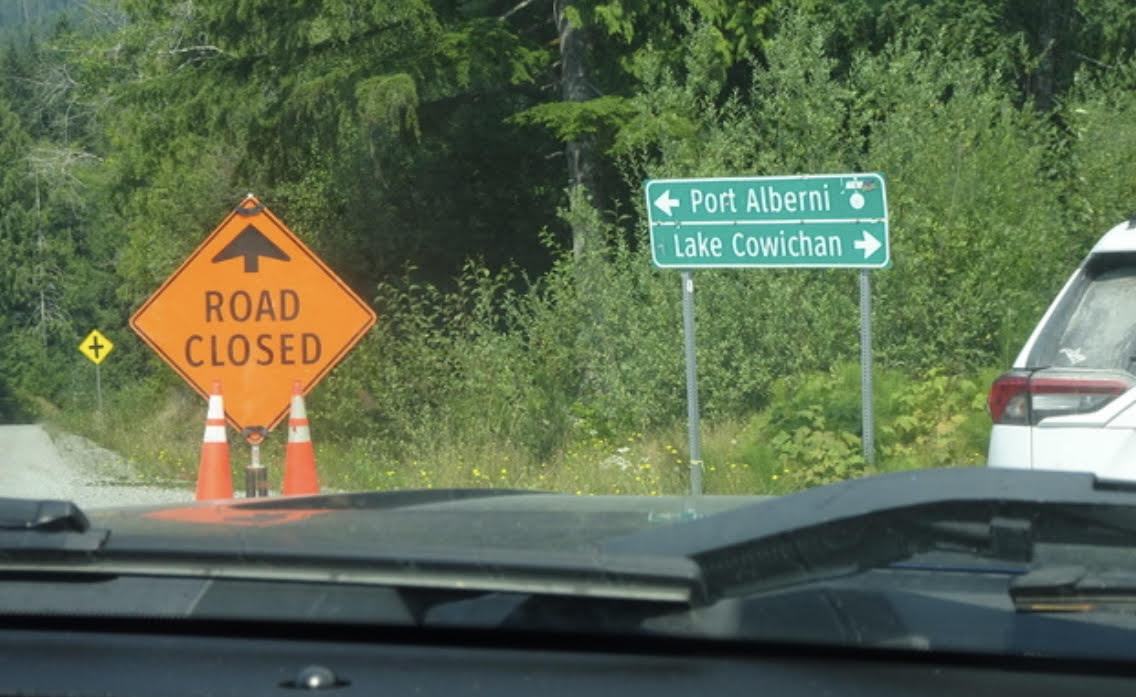
Exiting the local community, we were acutely aware at how few resources Bamfield now had: we had a lot of unused goods that we left for locals. We learned thatthe iPhone 14 and newer models have a sattelite feature to text someone your plans. Intricate maps with logging road routes were handed out so we could get to Lake Cowichan. Convoying out, our family in two vehicles and ranging in age from two to 74, slowly made our way around winding logging roads. Celebrating with icecream in Lake Cowichan, our exit was validated as smoke and ash increased around us.
We decided to stay in Nanaimo for the rest of the week to get in more family time and upon hearing about our evacuation exit, each hotel extended a discount and upgrade.
Collaboration, care, concern and planning are themes that popped up again and again throughout these 24 hours of evacuating. These are my wishes for us all.
An emergency preparedness friend says that these are the exact kind of events to also prepare for. We’re spending a lot of time right now thinking about the BIG ones, but in fact, it’s these midsize events that are going to pop up more and more. We’ve already seen the heat domes the extra snow and increased rains. Let’s plan for these mid range kind of events. Feel free to reach out to your Mentors or any of us on the PLAN leadership team for more planning support.
Shared by Meaghen Taylor-Reid