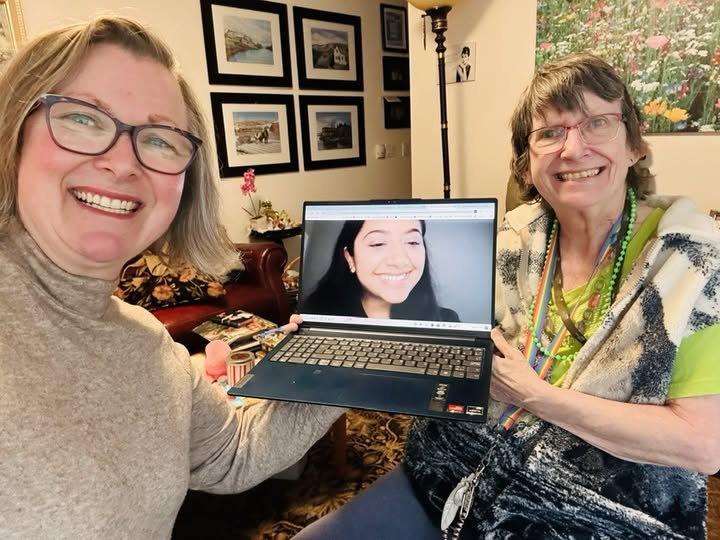
Throughout the fall of 2025, Barb E and Barb G took part in H-CARDD’s (Health Care Access and Research Developmental Disabilities) Brain Health Series — a national learning initiative focused on promoting brain health for aging adults with intellectual and developmental disabilities, family caregivers, and service providers.
The series is part of a broader capacity-building effort led in partnership with national and international collaborators who recognize aging and brain health as critical priorities for people who live with disabilities. Each week featured professional co-trainers alongside self-advocate trainers, creating learning spaces grounded in both lived experience and research. Self-advocates joined from across the country, building new connections and sharing perspectives.
As a friend to both Barbs, Meaghen (with PLAN, a partner in the project) joined the series to learn alongside them and support the experience. She described the weeks as plentiful — full of engagement, reflection, mindfulness, and even dance parties. On a blustery afternoon in Burnaby, Barb E and Barb G met with Meaghen around a long table at CoffeeZen to reflect on what stood out most.
For Barb E, one of the highlights was meeting self-advocates from across Canada. “It was neat to meet self-advocates from Newfoundland, Quebec, and Ontario. We represented the West Coast!”
Barb G appreciated how the information was shared. “We were learning things we didn’t know about in a way that’s plain language. Plain language is putting words into a way that people can understand better. I would have loved more time for each subject.”
Both Barbs shared that the breakout sessions were helpful, though sometimes they wished there had been more time to stay with certain topics.
When asked about favourite sessions, both spoke about learning related to mental health, social connection, sleep, movement, and memory. Barb G shared that she plans to bring some of the questions from the series to her doctor. Barb E said the strong connection between movement and mental health stood out most, and that Pilates and walking have become important parts of her routine. Both appreciated seeing people with disabilities involved not only as participants, but also as planners, trainers, and facilitators. “I thought it was neat that a person with disabilities was part of the planning, training, and facilitating,” Barb G said.
The series also sparked many new learnings. Barb E reflected on how changes in personality can sometimes be early signs of dementia and how physical health connects closely to brain health. Barb G was surprised to learn about bone scans, memory changes, and the importance of recognizing shifts in mood and wellbeing.
They also talked about listening to their bodies and respecting personal limits:
Some days I can walk two blocks and other days it’s different. Poof! It can change any time. Any movement is good movement!
For Barb G, learning about the brain itself filled an important gap:
I wasn’t allowed to attend science class in high school. So learning what my brain even does was hard and important.
The Barbs shared many practical takeaways from the series:
- Learning about the stages of sleep
- Keeping naps short
- Being mindful of caffeine and late meals
- Reducing screen time before bed
- Writing down worries
- Paying attention to exercise timing
These everyday changes felt realistic and supportive.
When talking about what fills their cups, both spoke warmly about the things that bring them joy and connection. Barb G shared her love of music, gardening, hosting, singing, theater, reading, knitting, and spending time with people she loves. Barb E spoke about Pilates, family time, crafts, concerts, learning new things, and gardening — especially growing tomatoes. “There’s honestly nothing a good tomato can’t solve.”
They also reflected on how vision, hearing, thyroid health, and other conditions can affect memory and wellbeing, and the importance of checking in with healthcare providers when changes appear.
One shared highlight was the movement and dance breaks during the sessions:
“Sometimes I danced standing up and sometimes in my seat!” Barb G said.
Both have since looked into community programs and classes as ways to stay active and connected.
When asked whether they would recommend the series to others, the answer was simple and enthusiastic:
I would recommend this series. It’s good to go with someone.
Barb G said this, and Barb E agreed right away:
Yes!
Barb and Barb’s reflections remind us that brain health is not only about medical information. It is about movement, learning, relationships, belonging, and having access to information in ways that respect people’s voices and experiences.
If you would like to learn more about this project or PLAN’s involvement, please contact hello@plan.ca.